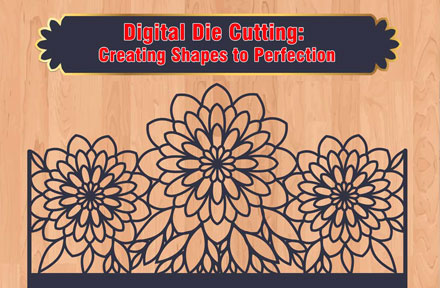
In the print and packaging industry, the moment of
transformation arrives not when ink hits the substrate but
when the flat, two-dimensional sheet becomes something
more: a carton, a label, a display, or a carefully sculpted
invitation. That moment, when print becomes product, is
defined by finishing. Over the last decade, finishing has
undergone a revolution. Digital Die Cutting, once seen as a
tool for prototyping and design studios, has evolved into a
mainstream production solution. Today, with equipment from
innovators such as Kongsberg, Zund, and other global leaders,
printers and converters are rethinking what is possible,
producing shapes with precision, creativity, and speed.
Unlike conventional die cutting, which relies on heavy,
expensive metal dies and long setup times, digital die cutting
is agile and flexible. Instead of waiting days for a die to be
fabricated, delivered, and mounted, a job can begin within
minutes of artwork approval. Every cut is driven by digital
data, meaning changeovers are fast, prototypes are
immediate, and even the most intricate patterns can be
executed without additional cost. This shift has not only
changed workflows but has also opened entirely new
business models around short-run packaging, customised
packaging, and corrugated packaging, areas where demand
is rising sharply.
The success of digital die cutting lies in the convergence
of several technologies. Modern finishing tables are fitted
with multi-tool heads capable of oscillating knife cuts,
creasing, routing, perforation, and kiss-cutting. They can
switch between these tasks seamlessly, ensuring flexibility
across diverse substrates. High-precision servo motors and
linear encoders guarantee accuracy, while rigid bridge
construction allows consistency across large beds.
Just as critical are vision and registration systems, which
scan printed marks and automatically align cut paths to
account for print drift. This ensures the cut is perfectly
matched with the printed image, a necessity in high-value
packaging. Meanwhile, advanced workflow software
optimises nesting, bleed handling, and cut sequencing,
often integrating directly with prepress and RIP software.
Vacuum systems, conveyorized feeding, and automatic
material sensing further improve efficiency. For substrates
like corrugated board, these features ensure sheets remain
stable during cutting and creasing, while adaptive cutting
systems automatically adjust blade depth for accuracy.
What emerges is a finishing solution that is as digitally
driven as the presses it serves, transforming finishing from a
bottleneck into a growth driver.
Short-Run Packaging
Perhaps the most compelling application for digital die
cutting is short-run packaging. In today’s fast-moving
consumer markets, brands frequently launch seasonal
editions, promotional SKUs, or trial products for specific
geographies. Traditionally, the cost and lead time of physical
dies made short runs uneconomical. A run of just 500
cartons could never justify the expense of a new die.
Digital die cutting changes that equation. Without tooling
costs, converters can profitably produce small batches with
rapid turnaround. Cosmetic companies can create limitededition
gift packs for festivals; beverage brands can test new
packaging concepts for regional launches; and luxury goods
producers can roll out personalised event packaging.
This is particularly powerful in India and the wider Asian
subcontinent, where festivals, weddings, and regional
celebrations demand packaging with short life cycles but
high visual impact. Printers who invest in digital finishing
equipment are finding themselves in demand for these highvalue,
short-run applications, where agility and creativity
command premium pricing.
Customised Packaging
In an era where consumers crave individuality,
customisation has become a differentiator. Because digital
die cutting follows a digital file, every piece can be different if
required. This makes personalised packaging not only
feasible but also profitable.
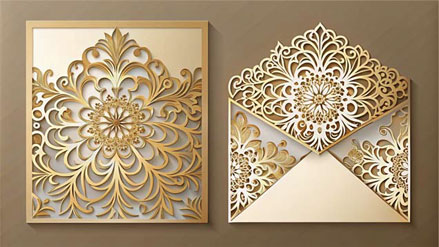
A wedding invitation box can feature the couple’s initials
cut into the design; a retailer’s point-of-sale display can be
adapted for specific outlets; or an online brand can ship
products in corrugated boxes personalised with regional
graphics or customer-specific messaging.
This ability to deliver bespoke solutions is particularly
relevant to the growing direct-to-consumer (D2C) sector in
India, where e-commerce brands use packaging as an
extension of their identity. A plain brown box no longer
suffices, customised corrugated packaging with clean die
cuts, vibrant print, and structural creativity makes unboxing
an experience. Digital die cutting is the enabler that brings
these designs to life without requiring prohibitive investment.
Corrugated Packaging
If there is one substrate where digital die cutting has
shown its true muscle, it is corrugated board. The surge in ecommerce
has placed corrugated packaging at the centre of
supply chains. Brands are increasingly using boxes not just
for protection but also for communication and branding.
However, corrugated is not easy to handle: its bulk, fluting,
and strength demand tools with precision and durability.
Digital die cutters equipped with heavy-duty creasing
wheels and routing heads now handle corrugated
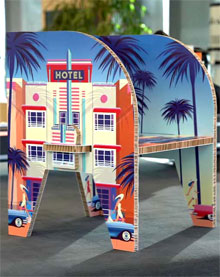
effortlessly. Printers can produce functional prototypes of ecommerce
boxes the same day, test structural designs for
retail-ready displays, or run small batches for regional
promotions. Importantly, the machines crease without
crushing the board, preserving integrity while ensuring
foldability.
In India, corrugated packaging is expanding rapidly due to the growth of online retail, food delivery, and logistics. Here,
digital die cutting adds flexibility to an industry traditionally
built on long runs. Corrugated converters now offer
customers the ability to prototype, customise, and scale,
positioning themselves as partners in innovation rather than
just suppliers.
Digital die cutting is not just about machinery; it is about
workflow simplification. From design to finished part, the
process is fluid. Designers prepare dielines in vector format,
software preflights and nests them, vision systems align the
print, and the machine executes the cuts in an optimised
sequence. Changeovers require no dies, meaning downtime
is negligible.
This makes same-day turnaround possible, a crucial
competitive edge in markets like India, where deadlines are
tight and customer expectations are rising. Waste is also
reduced through smart nesting, contributing to sustainability
goals. In a world where printers are expected to deliver both
creativity and environmental responsibility, digital finishing
checks both boxes.
In the Indian subcontinent, digital die cutting is still an
emerging but fast-growing segment. Traditionally, converters
relied heavily on manual or semi-automatic die cutting
machines, which were cost-effective for long runs but illsuited
for short, customised jobs. However, as brand owners
demand agility, the tide is shifting.
India has seen installations of Zund, Kongsberg, and other
European brands, primarily among packaging houses, largeformat
printers, and specialist converters in metros such as Mumbai, Delhi-NCR, Bengaluru, and Chennai. Early adopters
have focused on luxury packaging, prototyping, and
corrugated display work, where margins justify investment. At
the same time, smaller digital finishing systems, including
entry-level flatbeds, are finding their way into mid-sized
commercial printers who want to offer value-added services.
The growth drivers in India are clear. Short-run packaging
demand from FMCG, cosmetics, and lifestyle brands,
Customisation driven by festivals, weddings, and regional
markets, Corrugated packaging boom due to e-commerce
and retail-ready solutions and Design-to-market speed, as
Indian brands look to compress product launch cycles.
Awareness is spreading as well. Industry exhibitions such
as Pamex, Bharat Print Expo, PrintPack India and niche
packaging shows increasingly highlight digital finishing
equipment. Demonstrations of corrugated cutting and
customised carton prototyping are drawing strong attention,
especially from younger entrepreneurs and design-led
businesses.
Adoption is likely to accelerate as machine prices stabilise,
ROI becomes evident, and more local service networks
emerge. With its large consumer base and vibrant packaging
culture, the Indian subcontinent may become one of the
most dynamic markets for digital die cutting in Asia.
The journey of digital die cutting is far from complete. The
next wave is already visible. Automation is entering finishing
rooms, with robotic arms handling sheet loading and finished
stack removal. Artificial intelligence is being developed to
predict tool wear, optimise cut paths, and detect quality
errors in real time. Hybrid systems that combine lasers with
mechanical tools are pushing the limits of precision and
speed.
Sustainability, too, will shape the future. As brands move to
reduce waste and carbon footprints, digital finishing enables
on-demand production, cutting down on overstocking and
obsolete packaging. Printers who align digital finishing with
green strategies will gain a competitive edge.
Digital die cutting is not just a new way to finish, it is a new
way to think about print and packaging. It empowers printers
to profit from short runs, to deliver customised packaging,
and to transform corrugated board into branded experiences.
It brings agility, creativity, and sustainability into the finishing
stage, ensuring that the last step of production is also the
one that adds the most value.
In markets like India, where consumer tastes change
rapidly, celebrations demand constant innovation, and ecommerce
fuels corrugated growth, the potential is vast.
Printers who embrace digital finishing will not only keep pace
but will set themselves apart as enablers of design, partners
of brands, and creators of unforgettable shapes.
At its heart, digital die cutting delivers more than precision
cuts, it delivers shapes to perfection, ideas to market, and
imagination to reality.
- Team DI
Staying Ahead of the Curve
For printers, converters, and creative service providers, the best approach is to view Canva’s COS as a gateway rather than a threat. Exploring its ecosystem can help them understand how brand teams are creating and distributing content. Investing time in mastering AI-augmented workflows will be essential. Those who can align their print services with Canva’s output pipelines, ensuring accurate colour reproduction, consistent finishing, and faster delivery — will stand out as indispensable partners.
The print industry can also use this moment to reposition itself. Instead of being seen purely as producers of physical collateral, printers can evolve into creative fulfillment partners, helping brands extend their Canva-based assets into tangible, high-impact formats.
Canva’s Creative Operating System marks a turning point not just for digital design, but for the broader creative and production ecosystem. By merging design, intelligence, and marketing into a single continuum, it redefines how creativity is organised and executed. For print and packaging professionals, this evolution underscores a simple truth, the future of print lies in its connection to digital workflows.
As the lines between creation, execution, and measurement continue to blur, those who can integrate with systems like Canva’s COS will not only stay relevant but thrive. The Imagination Era, as Canva envisions it, belongs to those who can combine technology and creativity, and for the world of digital print, that imagination is just beginning to take shape.
|