Fashion has always been a place where imagination and innovation meet. Every era brings with it revolutions in how clothing is conceived, made, and experienced. The sewing machine of the nineteenth century, the rise of synthetic fabrics in the mid-twentieth century, and the arrival of fast fashion in recent decades are all milestones that reshaped the way we interact with clothing.
For centuries, textile printing relied on labour-intensive and
resource-heavy traditional methods such as block printing or
later, screen and rotary printing. Block printing, one of the
earliest techniques, required painstakingly carved wooden
blocks dipped in dye and pressed onto fabric, a slow but
beautiful craft. With industrialization, screen printing offered
greater efficiency, using stencils and layers of colour to
decorate textiles, while rotary screen printing mechanized the
process and enabled mass production. These techniques,
however, came with significant drawbacks: they were costprohibitive
for small runs, limited in detail, and highly
wasteful in terms of water, dye, and energy.
Against this backdrop of traditional practices, digital
printing emerged in the 1980s and 1990s as a radical
alternative. Engineers adapted inkjet printing technology, the
kind used on paper, to textiles, experimenting with
formulations that could directly infuse colour into fabric
fibers. By the late 1990s, early adopters in Europe and Asia
were producing digitally printed textiles for fashion
experimentation. The appeal was immediate. Digital printing
eliminated the need for multiple screens or dyes to render
complex images, creating designs with photographic
realism, unlimited colour options, and no laborious setup
costs. Suddenly, producing one garment with a unique, intricate
print became just as feasible as producing thousands.
The process itself is deceptively simple. A designer begins
with a digital file, often created on computer-aided design
software, which translates seamlessly into the printing
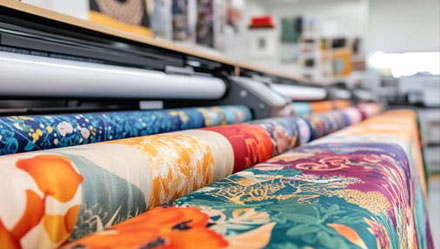
machine. The fabric, pre-treated with chemicals to enhance
dye receptivity, is passed through an inkjet printer modified
to spray specialized inks directly onto the textile surface.
Once printed, heat or steam locks the dye into the fibers,
ensuring the colours remain vibrant even after repeated
washing. The printed fabric then undergoes finishing
processes to heighten durability and feel. Behind this
process are multiple printing technologies: direct-to-fabric
methods for cottons and silks; sublimation printing, ideal for
synthetics such as polyester; and pigment printing, which is
gaining prominence for its minimal water demand and
environmental advantages.
For designers, the benefits were enormous. Where
traditional printing limited creativity through cost and
technical constraints, digital printing opened up artistic
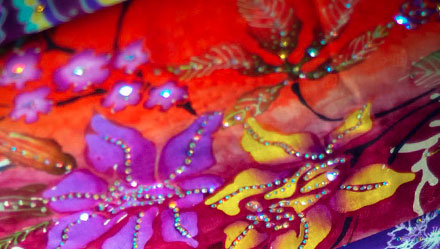
possibilities with virtually no boundaries. Suddenly it became
possible to render photographic landscapes across a
flowing gown, or surreal kaleidoscopic visions on everyday
streetwear. Designers used the technology to turn clothing
into canvases for elaborate illusions and special effects.
Some designers employed the detail of digital printing to
create dresses that resembled winged creatures or natural
landscapes, blurring distinctions between art and fashion.
This creative freedom was matched by speed and
efficiency. Designers could prototype rapidly, reducing the
time between a concept sketch and a wearable sample from
months to mere days. Smaller collections or even single
garments became economically viable, allowing
independent designers and emerging brands to enter a
space dominated by major fashion houses. Digital printing
democratized fashion design by breaking down the high
costs associated with traditional printing setups.
Its impact did not stop with high fashion runways. The fast
fashion industry, defined by brands that thrive on speed and
quick response to consumer trends, found in digital printing
a perfect partner. With digitally printed textiles, retailers could
react instantly to viral styles or influencer trends, producing
short runs of garments that landed in stores in a matter of
weeks. Instead of committing to massive, uniform print runs,
they could diversify, offering customers greater variety and
maintaining a sense of freshness in collections. The supply
chain became more agile and adaptable, reflecting the
industry’s constant demand for novelty.
At the other end of the market, customization flourished.
Increasingly, consumers sought individuality, preferring
garments that reflected their personal stories rather than
mass-produced designs. Digital printing made this possible
on a scale unimaginable in the past. Suddenly, a consumer
could co-create a design online, choosing motifs, colours, or
even personal photographs, and have it printed onto fabric
for delivery in a matter of days. Sportswear giants such as
Nike and Adidas launched customization platforms where
customers could design their own jerseys or sneakers, while
luxury houses began offering personalized monograms and
exclusive design collaborations. Instead of fashion dictating
uniformity, it began to pivot toward curated individuality,
shaped by the wearer and enabled by technology.
One of the greatest advantages of digital printing lies in its
contribution to sustainability, a critical concern for a sector
often accused of being one of the most environmentally
harmful industries in the world. Traditional textile dyeing
accounts for about one-fifth of industrial water pollution, with
vast amounts of untreated wastewater carrying harmful
chemicals into rivers and ecosystems. Digital printing
drastically reduces this impact. Using up to 95 percent less
water, it applies colour directly where it is needed, eliminating
the excess runoff that plagues traditional processes.
Likewise, chemical usage is minimized because dyes are
laid down so precisely. Beyond these efficiencies, digital
printing also promotes a smarter supply chain by allowing
on-demand production. Brands no longer need to
overproduce in anticipation of demand; they can produce
clothing in smaller runs or in direct response to customer
purchases, reducing the mountain of unsold garments that
often end up in landfills.
Yet challenges remain. Industrial-grade digital printing
machines are expensive, often limiting access for small
businesses despite the lowered costs of production in the
long run. While improving rapidly, printing speeds cannot
always rival those of rotary screen printing in massive, highvolume
runs, meaning the technology is not yet the perfect
replacement on every level. Some ink formulations still face
issues of durability and wash resistance compared to
traditional methods, and not every fabric reacts equally well
to digital inks without specialized pre-treatments. Costs of
inks themselves can be high, creating bottlenecks for wider
adoption. However, ongoing research into ink chemistry, faster industrial printers, and cheaper equipment points to a
near future in which these challenges are steadily overcome.
Digital printing promises to align seamlessly with other
emerging technological trends in fashion. Artificial
intelligence is already transforming design processes,
assisting in generating patterns, predicting consumer tastes,
and analysing trends. When paired with digital printing, AI
could enable a new era of predictive personalization, where a
design is created uniquely for a consumer based on their
preferences and past behaviour. Similarly, as 3D printing
technology evolves, we may witness hybrid processes
combining sculptural, three-dimensional elements with
digitally printed textiles, blurring the line between garment
and architecture. Sustainability, too, will remain at the core of
this future. Research is underway to develop fully
biodegradable inks, recyclable polyester substrates, and
closed-loop systems where printed fabrics can be
continuously reused.
Market forecasts suggest that digital textile printing will
expand significantly over the next decade, with projections
estimating the market size could surpass eight billion dollars
by 2030. This growth underscores both consumer appetite
for distinctive fashion and the industry’s acceleration toward
greener practices.
Ultimately, the evolution of digital printing in the fashion
industry represents more than just a new technical process.
It embodies a cultural and commercial shift toward
individuality, agility, and ecological mindfulness. It has
transformed the fashion design process from something
limited by technical barriers into a fluid dialogue between
creativity, technology, and consumer expression. Designers
can unleash their imagination without compromise,
consumers can co-create garments reflective of their
identities, and brands can embrace more responsible and
efficient ways of working.
Fashion, at its best, has always captured the spirit of the
times. Today, that spirit is defined by the quest for
personalization and sustainability. Digital printing, bridging
both ideals, stands as one of the most significant innovations
powering the industry’s future. As technology advances and
adoption broadens, it promises to redraw not only patterns on
fabric but also the fundamental patterns of global fashion itself.
|