For decades, the print industry has wrestled with a stubborn problem: how do you show a
customer what a foil stamp, a raised spot varnish, or a soft-touch lamination will actually look
like before you’ve committed substrate, plates, tooling, and press time to producing it? Mockups
were physical, slow, and expensive. Renderings in standard design software flattened
everything into the same matte RGB soup, unable to capture how metallic ink catches light
or how a sculptured UV coating throws a shadow across a business card. Visualis3R,
developed by Khaos Technology Ltd and a growing network of industry partners, sets out to
close that gap and after digging into what the platform actually does, it’s easy to see why it’s
gaining traction among print service providers (PSPs) who want to sell embellishment as a
premium, not an afterthought.
At its core, Visualis3R is a visualization and configuration engine for print finishing effects.
Rather than treating colour, texture, and finish as separate design problems, it lets users
build a single composite preview that combines them all and see the result rendered
photorealistically, under simulated real-world lighting, before a single sheet touches a press.
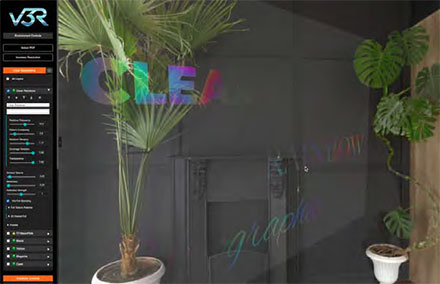
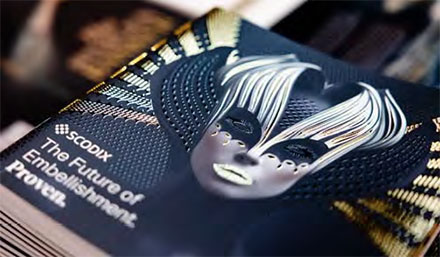
The effect library is genuinely broad. It covers hot foil and 3D raised foil, spot UV and
sculptured varnish, soft-touch matte and gloss laminations, metallic inks, white and clear
toner, neon and expanded-gamut inks, holographic films, glitter, and emboss/deboss work.
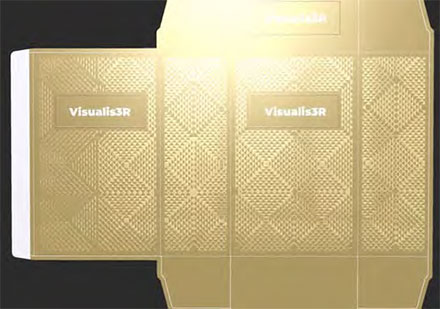
That range matters because most real jobs don’t use just one effect, a premium packaging
box might combine a soft-touch lamination base with a spot UV logo and a foil accent, and
Visualis3R is built to preview these effects stacked and combined, rather than one at a time
in isolation.
The mechanics are straightforward for anyone who has worked with layered PDF artwork:
designers or prepress staff assign spot colours or named layers to specific embellishment
effects, and Visualis3R renders the composite in real time. Because the previews are
photorealistic and lighting-aware, a client can see how a holographic label shifts under
angled light or how a raised varnish logo catches a shadow on a matte stock, details that are
simply invisible in a flat digital comp.
One of the most practically useful additions to the platform is the Layer Mapping Manager.
Anyone who has worked across prepress departments in different countries knows that
embellishment terminology is a mess. What one designer labels “Spot UV” might arrive at
the next studio as “Varnish,” “Lacquer,” or “Lack”, sometimes simply due to regional
convention, sometimes due to inconsistent house standards. These aren’t trivial naming
quirks; they cause real production errors when a job moves from a design agency to a
prepress department to a finishing line, especially across borders.
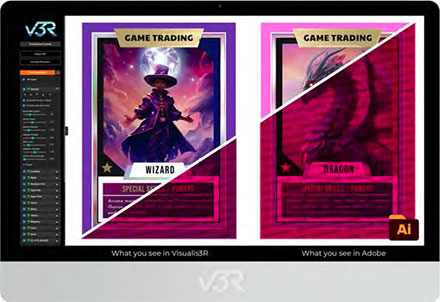
The Layer Mapping Manager lets users map any incoming spot colour, foil, or varnish layer,
regardless of what a designer happened to call it, to the correct embellishment effect inside
Visualis3R. It doesn’t force designers into a rigid global naming standard (which would be a
losing battle anyway); instead, it lets each shop define its own mapping once and reuse it, while staying flexible enough to absorb new industry-standard terms as they emerge. For a
PSP running jobs from multiple client studios or international brands, this quietly removes
one of the most common sources of finishing errors and reprints.
A second, less flashy but very practical feature is the recently expanded literature and
samples library. Color-Logic has made available 16 sample designs, each demonstrating a
different embellishment effect, along with literature, motion video, high-resolution images,
and ready-to-open production PDFs, all downloadable with no trial sign-up required.
This addresses a real and somewhat under-discussed operational headache: most print
shops don’t have a dedicated design team and understandably won’t show one client’s
proprietary artwork to another as a sales demo. The sample library gives sales and prepress
staff a neutral, professional set of assets they can use to demonstrate exactly how an effect
will behave, in a client meeting, on a website, or in a proposal, without ever touching a real
customer’s design. It’s a small thing operationally, but it removes friction from the sales
conversation, which is often the actual bottleneck in getting embellishment work approved
and scheduled.
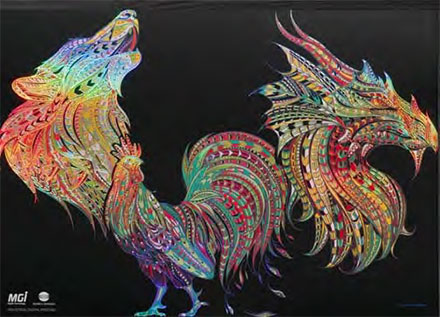
Print operations are rarely homogeneous, a mid-size PSP might run a digital toner press for
short runs, an offset line for long runs, and a separate finishing unit (foil, UV coater,
laminator) that has to be scheduled independently. Visualis3R is built to support digital,
analog, and hybrid embellishment workflows, and to work across the broadest range of
special inks, toners, and finishing techniques, in combination rather than in isolation. That
means the same visualization and file-prep workflow can serve a shop’s whole equipment
fleet instead of requiring a different tool per press or per finishing device, a meaningful
simplification for operations teams juggling scheduling across digital and analog lines.
The commercial logic behind embellishment has always been sound: raised, tactile, metallic,
or light-reactive finishes are consistently shown to increase engagement and perceived
value in printed materials. The problem has never been whether embellishment sells, it’s
been the friction and risk involved in getting from “the client likes the idea” to “the job runs
correctly on press.” Visualis3R attacks that friction from several angles at once:
By letting a PSP soft-proof a job and visualize every effect under realistic lighting before
committing to a production run, Visualis3R reduces the guesswork that leads to wasted
substrate, mistimed foil dies, or a spot UV pass that doesn’t read the way the client
expected. That’s a direct hit to one of the most expensive line items in specialty finishing:
rework.
Being able to show a client, convincingly, in a meeting, on a laptop, exactly how a raised
varnish logo or a holographic accent will look, without waiting on a physical proof, shortens
the gap between pitch and purchase order. For PSPs trying to upsell embellishment on jobs
that would otherwise run as plain four-color work, this is often the difference between a client
saying “sounds nice” and actually signing off on the upcharge.
The Layer Mapping Manager in particular, reduces the operational risk of running jobs that
pass through multiple hands, multiple studios, or multiple countries, a growing reality as
brand owners centralize design while distributing production regionally.

A path to premium positioning. Perhaps most importantly, tools like this let a PSP credibly
market embellishment as a core service rather than a special favour reserved for its most
demanding clients. When a shop can reliably preview, price, and produce a combination of
foil, UV, and specialty ink effects, it’s in a stronger position to compete on differentiation
rather than price alone, particularly for packaging, luxury goods, invitations, and marketing
collateral where tactile impression genuinely moves the needle on brand perception.
No visualization tool eliminates the need for press calibration, substrate testing, and an
experienced finishing crew, Visualis3R previews possibilities, it doesn’t replace the physical
realities of running foil dies or UV coaters. Shops evaluating it should also budget time for
staff to learn the layer-mapping conventions and build out a reusable effect library specific to
their own equipment and stock choices, since the value compounds with use rather than
appearing instantly on day one.
Visualis3R fills a genuinely underserved niche: a dedicated, photorealistic way to configure
and preview print embellishment before it goes anywhere near a press. For print service
providers looking to build embellishment into a repeatable, sellable service line, rather than a
one-off specialty job handled by tribal knowledge, it offers a meaningful reduction in
production risk, a faster and more persuasive sales process, and a genuinely useful answer
to the terminology chaos that has quietly caused errors across the industry for years. For
shops serious about competing on value-added print rather than commodity print, it’s worth a
serious look.
|