Canva has announced Canva AI 2.0, describing it as the most significant evolution of its platform since the company launched in 2013. Available now as a research preview, the
update transforms Canva from a design tool into a conversational, agentic creative platform
where teams can move from initial idea to finished, published work entirely within one
environment.
At the heart of the launch is the Canva Design Model, what the company claims is the
world’s first foundation model built specifically to understand the structure, hierarchy, and
complexity of real-world design. Unlike conventional AI image generators that produce flat,
static outputs, the Canva Design Model generates fully layered, editable designs from a
single prompt, with every element remaining individually adjustable. Crucially, the system is
built to learn from use, becoming more attuned to a user’s working style and brand
preferences over time.
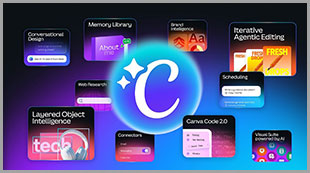
Canva AI 2.0 is built around four core capabilities. Conversational design allows users to
begin with a rough idea or brief rather than a blank canvas, with Canva AI generating
structured, on-brand designs and remaining present throughout the creative process.
Agentic orchestration enables the AI to independently select and coordinate the right tools to
fulfil complex requests, from multi-channel campaign builds to client presentations. Layered
object intelligence ensures that every generated element is independently editable, changing
a headline or swapping an image affects only that element, leaving the rest of the design
intact. Finally, a Memory Library gives the platform persistent memory of a user’s
preferences, brand guidelines, and creative style, making each subsequent output more
relevant and consistent.
Sitting on top of this foundation are six new intelligent workflows. Connectors integrate
Canva AI directly with tools including Slack, Gmail, Google Drive, Zoom, Notion, and
HubSpot, allowing users to generate on-brand visual content directly from their existing
conversations and data. Scheduling enables tasks to run automatically in the background, so
content is ready without manual prompting. Web research allows Canva AI to gather and
structure information from across the internet and deliver it directly into a design as editable
content.
Brand Intelligence automates the application of fonts, colours, and brand style across all
designs, and can update existing work to reflect a new brand identity in a single step. Canva
Code 2.0 allows users to build fully interactive, responsive digital experiences from a
conversational prompt, with support for HTML importing and the ability to publish to a
custom domain. Sheets AI generates structured, data-populated spreadsheets, from budget
trackers to content calendars, based on a simple description.
With over 250 million monthly users, Canva is positioning AI 2.0 as the foundation of its next
decade, shifting the starting point of creativity from templates to conversation.
|