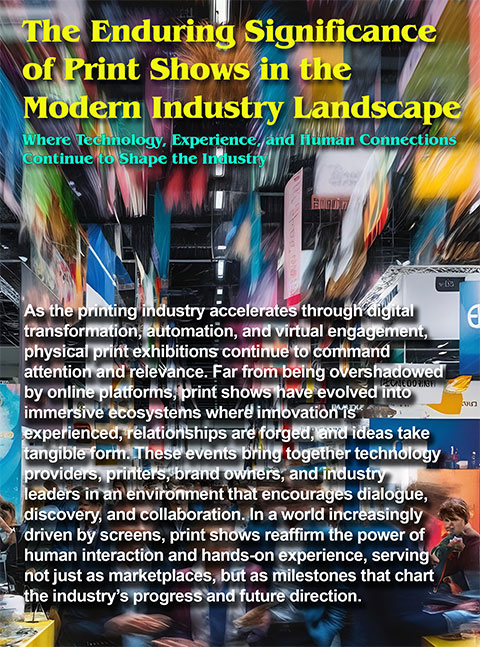
At a time when digital platforms, virtual meetings, and AI-powered tools dominate professional interactions, it would be easy to assume that physical print exhibitions are gradually losing relevance. After all, information is now accessible instantly, product videos can be streamed on demand, and business discussions can be conducted across continents with a click. Yet, despite these technological shifts, and in many ways, because of them, print shows continue to hold an irreplaceable position within the global printing ecosystem.
Across regions and market segments, print exhibitions remain critical meeting points where technology, creativity, commerce, and collaboration intersect. From large international trade fairs to focused regional shows, these events serve as powerful engines for industry growth, innovation, and relationship-building. Far from being relics of a pre-digital era, print shows have evolved into dynamic, multi-dimensional platforms that complement digital engagement rather than compete with it.
For the printing, packaging, publishing, signage, and allied industries, print shows provide something that digital interfaces cannot fully replicate, physical experience, human connection, and real-time discovery. In an increasingly virtual world, their relevance has not diminished, it has, in fact, deepened.
Print, by its very nature, is a tactile medium. Texture, finish, colour depth, substrate behaviour, and embellishment effects are integral to how print is perceived and valued. No matter how advanced digital visualisation tools become, they cannot fully convey the sensory experience of holding a printed product, feeling a paper stock, or observing print quality under natural lighting conditions.
Print exhibitions offer attendees the opportunity to engage with print in its truest form. Visitors can examine live samples, compare outputs across technologies, and understand subtle differences that directly influence buying decisions. Whether it is a digitally embellished label, a premium publication, a packaging prototype, or a wide-format application, the ability to see and touch the final product creates confidence and clarity.
This tangible interaction also fuels creativity. Designers, brand owners, and printers often leave exhibitions inspired, not just by machines, but by what those machines can create. In an era where digital fatigue is real, the physicality of print shows delivers a refreshing and impactful experience that reinforces print’s enduring relevance.
One of the most enduring strengths of print exhibitions is their unmatched ability to bring people together. Print shows act as convergence points for the entire value chain, manufacturers, suppliers, converters, printers, designers, brand owners, publishers, and service providers, creating an environment rich in opportunity.
Unlike virtual networking, where interactions are often scheduled, transactional, or limited in scope, physical exhibitions enable spontaneous conversations and relationship-building. A chance meeting at a booth, a discussion during a live demonstration, or an informal exchange over coffee can often lead to partnerships that shape long-term business outcomes.
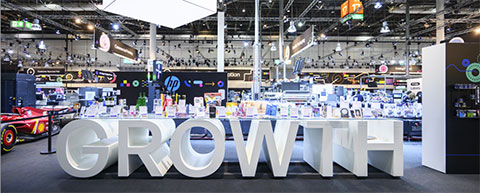
For decision-makers, these face-to-face interactions build trust more effectively than digital communication alone. For new entrants and startups, exhibitions offer visibility and access to industry leaders that might otherwise take years to achieve. In a business built on relationships as much as technology, print shows remain one of the most effective platforms for meaningful networking.
Print exhibitions are no longer just about machines on display, they are about solutions, workflows, and future-ready strategies. Today’s print shows reflect how the industry is responding to market pressures such as shorter run lengths, faster turnaround times, personalisation, sustainability, and automation.
From next-generation digital presses and inkjet platforms to software-driven workflow solutions, finishing systems, and sustainable materials, exhibitions provide a comprehensive view of where the industry is headed. Live demonstrations allow attendees to see technologies in action, ask technical questions, and understand real-world applications rather than theoretical capabilities.
Importantly, print shows also serve as testing grounds for innovation. Feedback gathered during exhibitions often influences product refinement and future development. This two-way exchange between manufacturers and users reinforces the role of exhibitions as collaborative innovation hubs rather than one-way marketing platforms.
Beyond the exhibition floor, print shows have increasingly positioned themselves as knowledge-driven events. Conferences, seminars, panel discussions, and workshops now form an integral part of most major print exhibitions, addressing both technological and business challenges.
These educational forums cover a wide range of topics, market trends, automation, colour management, sustainability compliance, AI integration, workforce development, and evolving customer expectations. For print professionals navigating rapid change, these sessions offer actionable insights and strategic perspectives that extend far beyond equipment investment.
For younger professionals and students entering the industry, print shows serve as immersive learning environments. Exposure to industry leaders, real-world applications, and career pathways helps bridge the gap between academic learning and practical industry experience. In this sense, exhibitions play a vital role in nurturing the next generation of print professionals.
For exhibitors, print shows remain one of the most effective platforms for building brand presence within a highly targeted audience. Unlike digital marketing, which often competes for attention in a crowded online space, exhibitions offer focused engagement with attendees who are actively seeking solutions and partnerships.
A well-designed booth, compelling demonstrations, and knowledgeable staff can create a lasting impression that extends well beyond the duration of the event. Exhibitors can tell their brand story, demonstrate value propositions, and address customer concerns in real time—something digital channels struggle to replicate with the same depth.
Moreover, print shows often generate significant media coverage, social media engagement, and post-event discussions, amplifying visibility long after the exhibition doors close. For companies looking to reinforce credibility, launch new offerings, or enter new markets, print exhibitions continue to deliver measurable return on investment.
Perhaps one of the most understated yet powerful roles of print shows is their ability to foster a sense of industry community. In a sector that spans diverse applications and technologies, exhibitions provide a shared space where challenges are discussed openly and collective solutions emerge.
Industry associations, trade bodies, and advocacy groups often leverage exhibitions to engage with members, address regulatory developments, and promote best practices. Collaborative discussions around sustainability, skills development, and standardisation frequently find momentum during these gatherings.
In times of disruption, whether technological, economic, or global, print shows also serve as rallying points for the industry. They reinforce resilience, adaptability, and a shared commitment to progress, reminding stakeholders that print is not a fragmented industry, but a connected ecosystem.
Importantly, the future of print exhibitions is not about resisting digital transformation but integrating it intelligently. Many shows now incorporate hybrid elements, digital previews, virtual matchmaking, online knowledge sessions, and post-event content, to extend engagement beyond physical boundaries.
However, these digital tools enhance rather than replace the core value of physical exhibitions. The industry has recognised that while information can be shared digitally, experience cannot. The most successful print shows are those that balance physical engagement with digital support, creating year-round relevance while preserving the irreplaceable value of in-person interaction.
In an age defined by speed, screens, and short attention spans, print shows continue to stand as anchors of depth, dialogue, and discovery. Their enduring significance lies not in nostalgia, but in their ability to evolve while staying true to the fundamental needs of the industry, connection, experience, learning, and collaboration.
For the printing and allied industries, exhibitions remain vital platforms where ideas turn into opportunities, technologies meet real-world needs, and relationships translate into long-term growth. As the industry navigates its next phase of transformation, print shows will continue to play a central role—not as standalone events, but as catalysts shaping the future of print.
For publications like Print Traveller, which chronicle the global exhibition landscape, the message is clear: print shows are not just surviving in the modern industry landscape, they are thriving, adapting, and proving more relevant than ever.
.
|