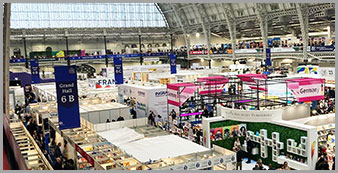
The global publishing industry descended on West London in March for a fair full of
energy, debate, and a touch of nostalgia.
The London Book Fair returned to Olympia, Kensington, from 10–12 March 2026 for what
proved to be a landmark edition and a farewell. This year’s fair was the last at the famed
West London venue before the event relocates to the ExCeL centre in the Docklands in
2027, lending proceedings a sense of occasion that mixed genuine excitement with a hint of
wistfulness.
The fair welcomed 1,005 exhibitors and more than 33,000 visitors, with first-year fair director
Emma Lowe describing attendance as “overall strong,” though noting it was slightly impacted
by travel difficulties among Middle Eastern, Indian, and Australian attendees due to the
ongoing conflict in Iran.
The professional programme was as rich and varied as ever. Hundreds of industry leaders,
experts, authors and technologists gathered to explore a wide array of topics, including AI, the continuing boom in digital audio, rights and licensing, and threats to the freedom to
publish and to read. The keynote sessions drew packed audiences: Penguin Random House
UK CEO Tom Weldon addressed the publishing landscape, while Joanna Prior, Pan
Macmillan CEO, made her first major industry address since taking the role.
AI was inescapable across the show floor and seminar theatres. The most meaningful
conversations were not about novelty but about application, publishers wanted to discuss
where AI can genuinely help, from reducing repetitive work to improving workflow efficiency
and supporting accessibility, but questions around ethics, oversight, and quality were never
far away. The tension was made visible by the author-led “Don’t Steal This Book” protest,
with free copies of the publication displayed prominently at the Penguin Random House
stand.
A strong theme running through the fair was the urgent need to cultivate the next generation
of readers. Several panels focused on how publishers aim to address the decline in reading
among young people and what that implies for the future of the industry, with one speaker
issuing a “clarion call to make sure that we develop more readers if we want the industry to
survive.” The fair also shone a light on underrepresented voices, with a session marking the
launch of a long-term initiative to support writers across Sudan and South Sudan, held in
partnership with the British Council and the British Library.
India’s presence at this year’s fair was modest but purposeful. Of the 1,005 exhibitors, 150
represented companies from Asia, with fewer than 20 making it from India, a figure
somewhat lower than in previous years, partly attributed to the travel disruptions affecting
the region. Among the Indian companies that did attend, the Indo-British publishing services
firm Six Red Marbles stood out with a well-received session at the Tech Theatre. On the
opening day of the fair, Prema Ramalingam and Doss Jayaraman of Six Red Marbles
presented on AI-powered tools for curriculum development, drawing an audience of around
110 participants and generating substantive discussion about the application of AI across
educational publishing. Their stand drew a high number of walk-in visitors throughout the
three days, reflecting clear demand among international publishers for practical content
workflow solutions. India’s growing stature as a publishing force was also a topic of broader
conversation at the fair, with the country widely recognised as the world’s third-largest
publishing market. The rising cost of printing in India was noted as a complicating factor for
US publishers, adding to the wider economic pressures reshaping the global book trade.
The mood on the floor, despite geopolitical headwinds, remained optimistic. David
Steinberger, CEO of Open Road Integrated Media, summed up the atmosphere well: “The
mood at this year’s fair felt energetic. The market feels generally healthy, but people are
excited about new books, new ideas.”
As the doors closed on Olympia for the last time as LBF’s home, director Emma Lowe
reflected warmly on what had been achieved. “The past few days have felt really buzzy and
busy, and the feedback has been that people have been able to do good business,” she
said. Looking ahead to the move to ExCeL and the fair’s continued evolution, she was
characteristically generous: “We’re grateful for everyone who came. We don’t take it for
granted. And we look forward to next year, when we hope the fair will be even better.”
BACK TO NEWS |