FESPA Middle East 2027 will take place from 27–29 April 2027 at the Dubai World Trade
Centre (DWTC), bringing together the speciality printing, signage, visual communications
and textile decoration sectors from across the Middle East and international markets.
The new dates follow consultation with exhibitors, industry leaders and partners across the
Middle East and North Africa (MENA) region. According to FESPA, the move is aimed at
creating a strong platform for printers, sign-makers, suppliers and buyers to reconnect,
discover new technologies and explore opportunities for business growth.
Bazil Cassim, Regional Manager, Middle East & Africa, FESPA, said the decision to hold the
2027 edition in April was made in close consultation with industry stakeholders. He
described Dubai World Trade Centre as an ideal venue for creating an environment focused
on business engagement, knowledge sharing and technology discovery.
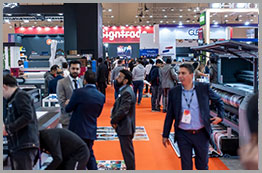
The 2027 event will build on the success of FESPA Middle East 2026, which attracted 3,593
visitors from 72 countries and featured more than 150 global brands. The exhibition also
hosted 31 educational sessions led by 21 international experts, highlighting the increasing
importance of knowledge and strategic guidance alongside technology showcases.
Education will remain a key component of FESPA Middle East 2027. The conference
programme is expected to address issues including artificial intelligence, automation,
sustainability, workflow optimisation, leadership and business transformation, supported by
market intelligence, practical insights and real-world case studies.
FESPA’s Print Census 2026 research is also expected to influence the educational
programme. Its findings identify sustainability, automation and AI as major forces shaping
the future of the speciality print industry. While sustainability is increasingly recognised as a
priority, many businesses are still working to translate ambitions into measurable outcomes.
Automation is gaining importance for improving speed, consistency and profitability, although
investment remains a challenge for smaller businesses. Meanwhile, growing interest in AI is
accompanied by a need for practical and low-risk implementation strategies.
FESPA Middle East has established a strong international profile, with 76% of visitors at the
2026 edition coming from GCC countries and 24% from international markets. This provides
exhibitors with access to customers and decision-makers from across the wider MENA
region and beyond.
Cassim emphasised that FESPA’s not-for-profit status enables the organisation to focus on
supporting the speciality print community through exhibitions, education and research. He
said the Middle East and North Africa region has a strong appetite for innovation and
collaboration.
BACK TO NEWS |